

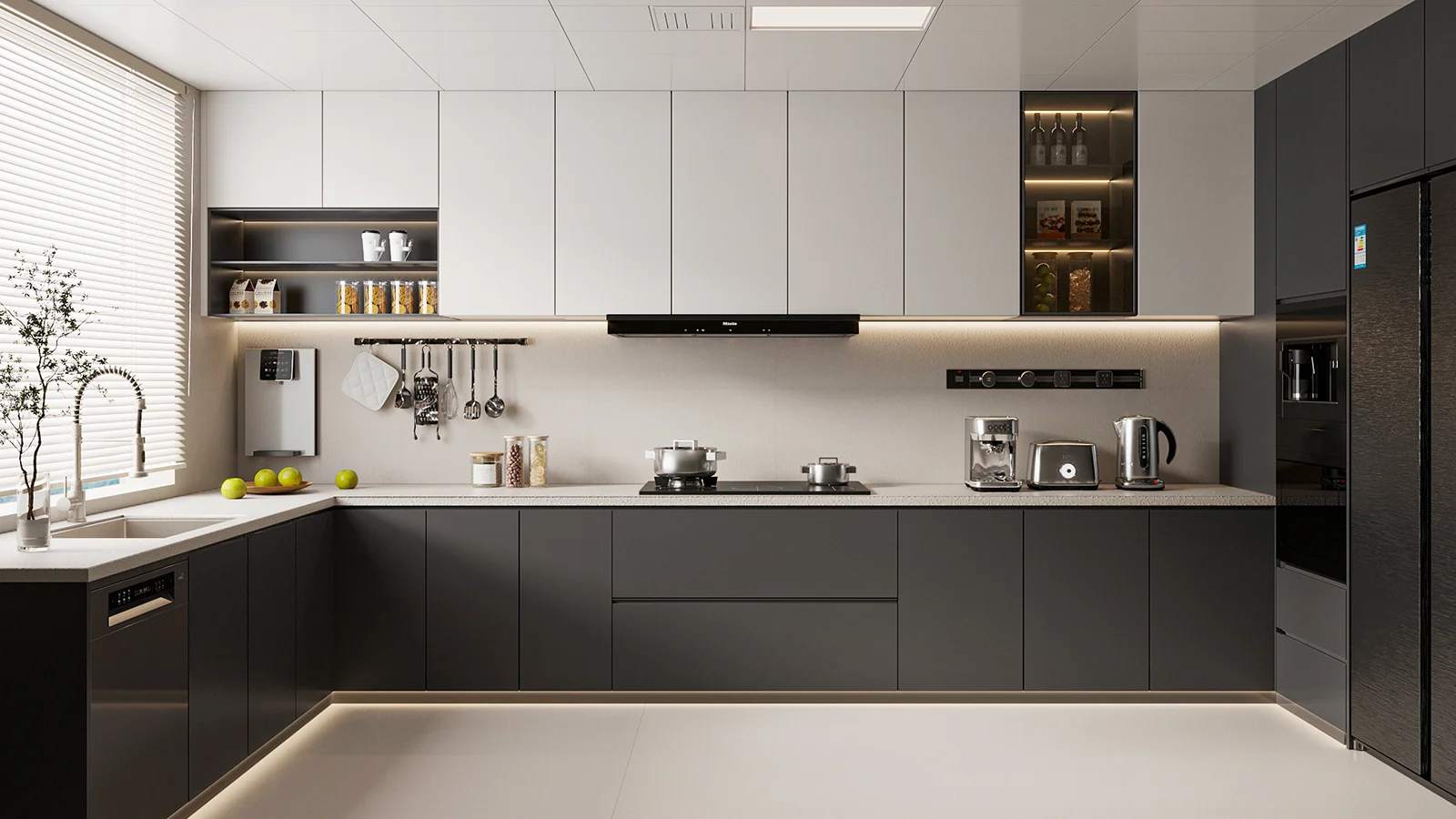
Material Choice Is a hard decision especially when you stands between the price and quality. In project-based cabinet manufacturing, the cabinet carcass is the structural core that defines durability, reliability, and lifecycle performance. Today we are going to make short contrast between the plywood carcass and particle board carcass.
1. Structural Integrity: The Foundation of Luxury
Plywood carcass
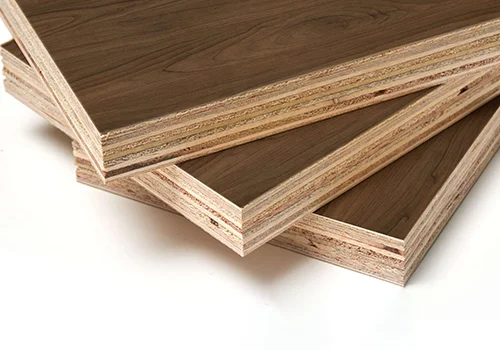
Plywood is constructed from multiple layers of real wood veneer, cross-laminated with alternating grain directions. This structure provides:
• Superior dimensional stability
• High resistance to bending and deformation
• Even stress distribution across panels
For LUXOOD, plywood is not an upgrade—it is the baseline requirement for a cabinet carcass intended to last for decades in residential, hospitality, and multi-unit projects.
Partical Board
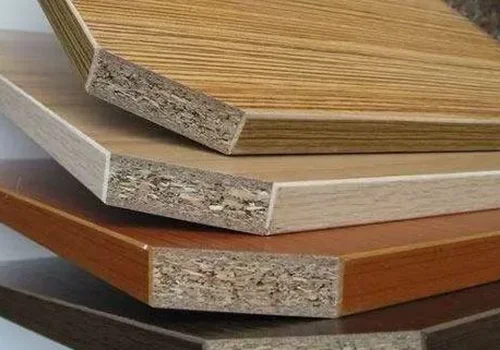
Particle board is made by compressing wood particles with resin. While it may appear uniform, its internal structure lacks true directional strength, leading to:
- Weaker panel rigidity
- Limited edge strength
- Faster fatigue under long-term load
From an engineering perspective, particle board functions as a cost-driven solution, not a performance-driven one.
2. Load-Bearing Performance in Real-World Use
Cabinet carcasses must support:
- Stone or engineered countertops
- Fully loaded drawers and shelves
- Doors subjected to thousands of opening cycles
Plywood carcasses offer excellent screw-holding capacity and long-term joint stability. This is critical for hinges, drawer slides, and structural connectors.
Particle board carcasses, by contrast, depend heavily on cam fittings and specialized fasteners. Over time, repeated stress may result in:
- Loosened joints
- Sagging panels
- Reduced structural confidence
At LUXOOD, we design cabinets for predictable performance, not acceptable minimums.
3.Moisture Resistance: A Non-Negotiable Requirement
Plywood (LUXOOD Carcass Material)
- Better tolerance to incidental moisture exposure
- Reduced swelling when properly sealed
- Higher reliability in kitchens, bathrooms, and humid regions
This makes plywood essential for global projects where climate conditions vary significantly.
Particle Board
- Highly sensitive to moisture penetration
- Swelling is often permanent once exposed
- Edge failure becomes likely if finishes are compromised
For LUXOOD, moisture-related structural risk is unacceptable in premium cabinetry.
4.Lifecycle Cost: Looking Beyond Initial Price
Particle board is often chosen for its lower upfront cost. However, LUXOOD evaluates materials based on lifecycle value, not initial savings.
| Performance Factor | LUXOOD Plywood Carcass | Particle Board Carcass |
| Structural Lifespan | Long-term | Limited |
| Maintenance Risk | Low | Higher |
| Fastener Reliability | High | Moderate |
| Replacement Frequency | Minimal | Higher |
In large-scale developments, hotels, and rental properties, predictability and longevity consistently outweigh short-term cost reductions.
Conclusion: Why LUXOOD Works with Plywood—And Only Plywood
At LUXOOD, luxury is not defined by surface finishes alone.
It begins with what you do not see—the cabinet carcass.
- Plywood delivers superior strength, stability, and moisture resistance
- Particle board prioritizes cost over longevity
- LUXOOD chooses structure, performance, and long-term value
This is why every LUXOOD cabinet is built on a plywood carcass—without exception.